
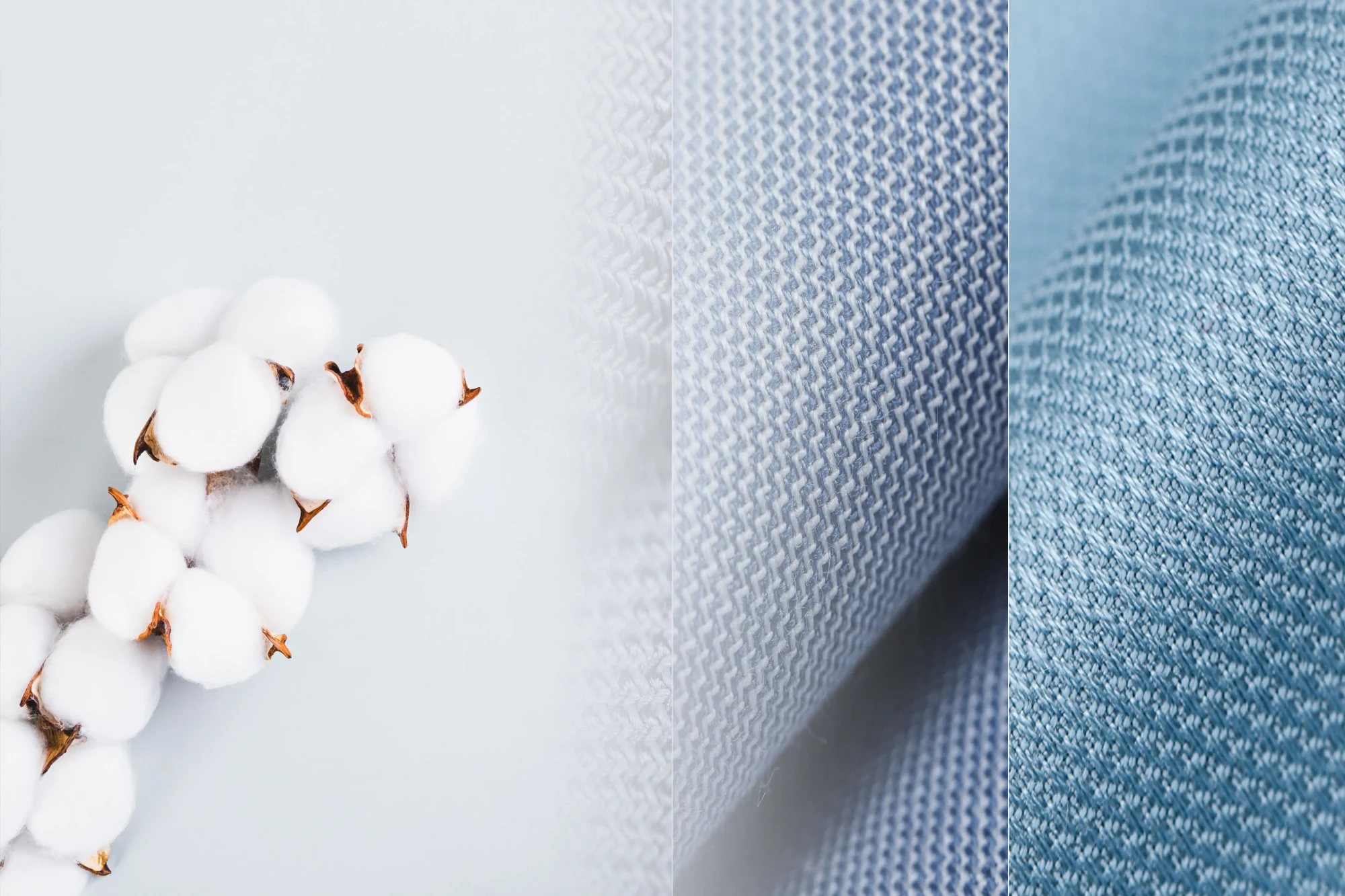

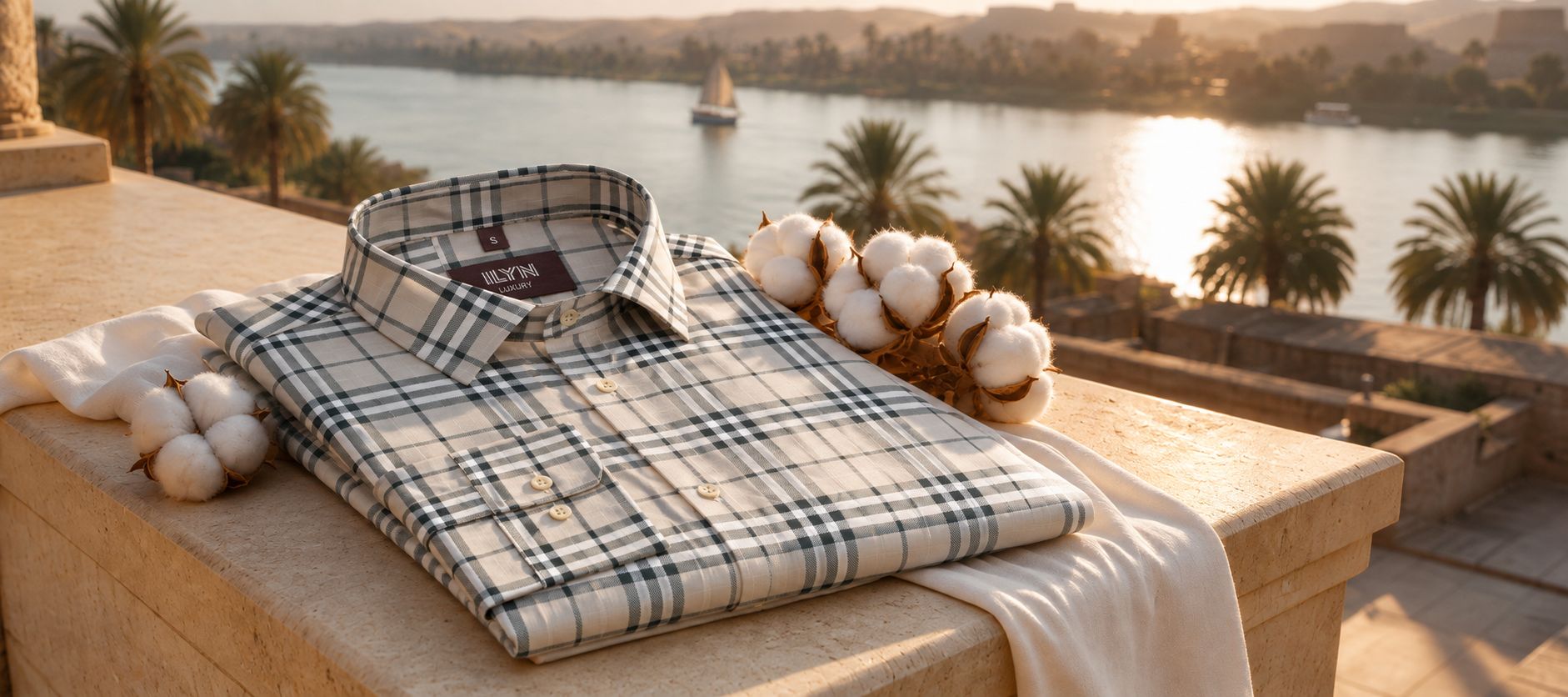
Pick up a genuinely good cotton shirt and the first thing you notice isn’t the whiteness. It’s the silence. Cheap cotton rustles, complains, holds a crease like a grudge. The good stuff falls like water. That particular quiet is Egyptian cotton’s signature, and it comes down to one defining characteristic: the length of a single fibre.
The reputation behind the name Egyptian Cotton isn’t just modern marketing either, and its exceptionally long-staple fibre was celebrated as “white gold” among Europeans. However, the story behind Egyptian Cotton is inseparable from European colonialism. When the American Civil War cut off Southern cotton in 1861, the extraordinary demand drew European financiers deeper into Egypt. Britain and France had already gained extensive control over Egypt’s finances, with European officials overseeing state revenues and expenditure in their thirst for colonial power. When Egyptians resisted these growing colonial ambitions and demanded control over their own country, Britain invaded Egypt in 1882 and imposed decades of colonial occupation. The cotton Europe coveted had helped make Egypt economically valuable to foreign powers, while the wealth it generated became entangled with the stripping of Egyptian sovereignty due to the brazen British imperial tactics.
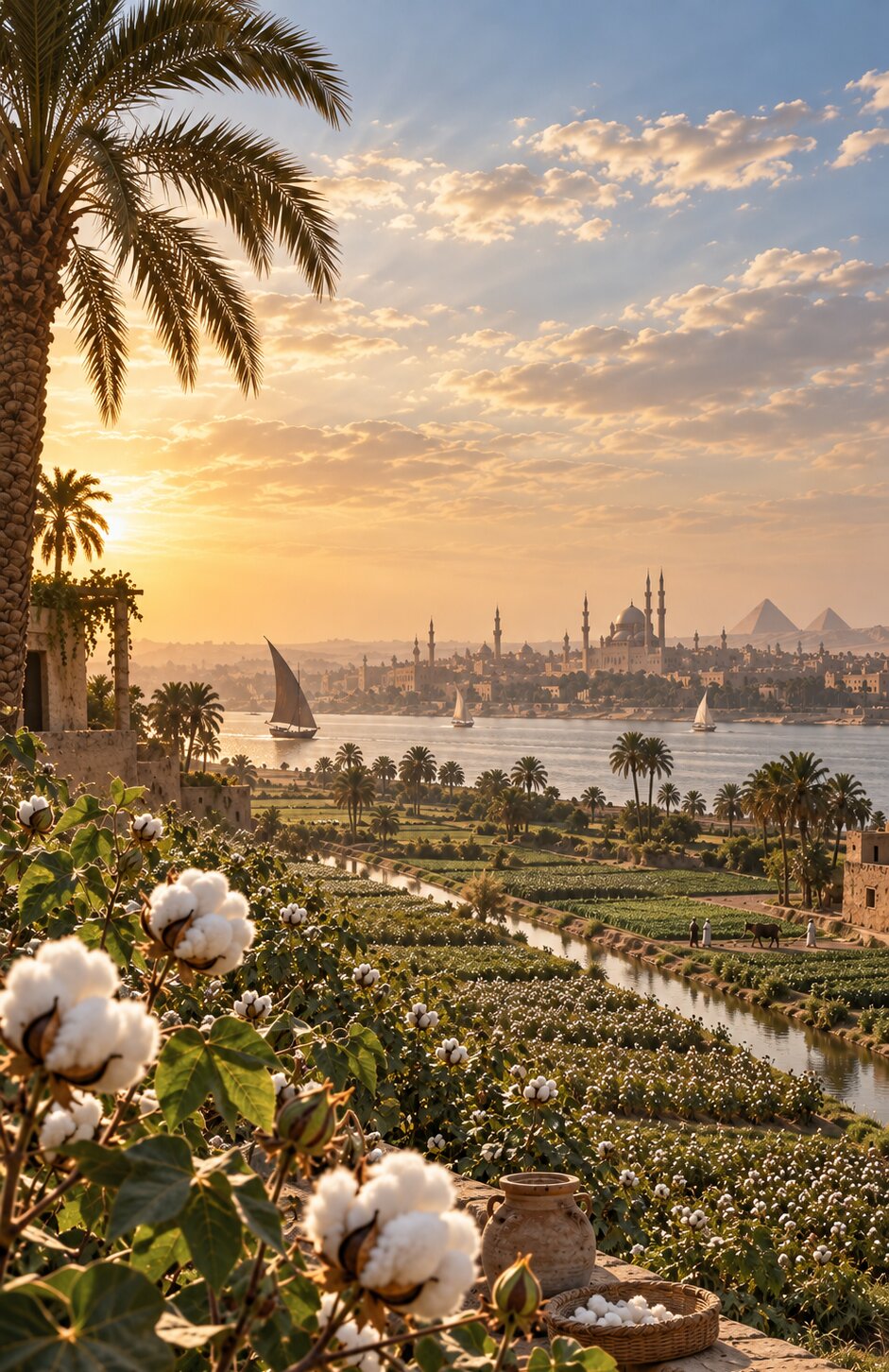
A Matter of Millimetres
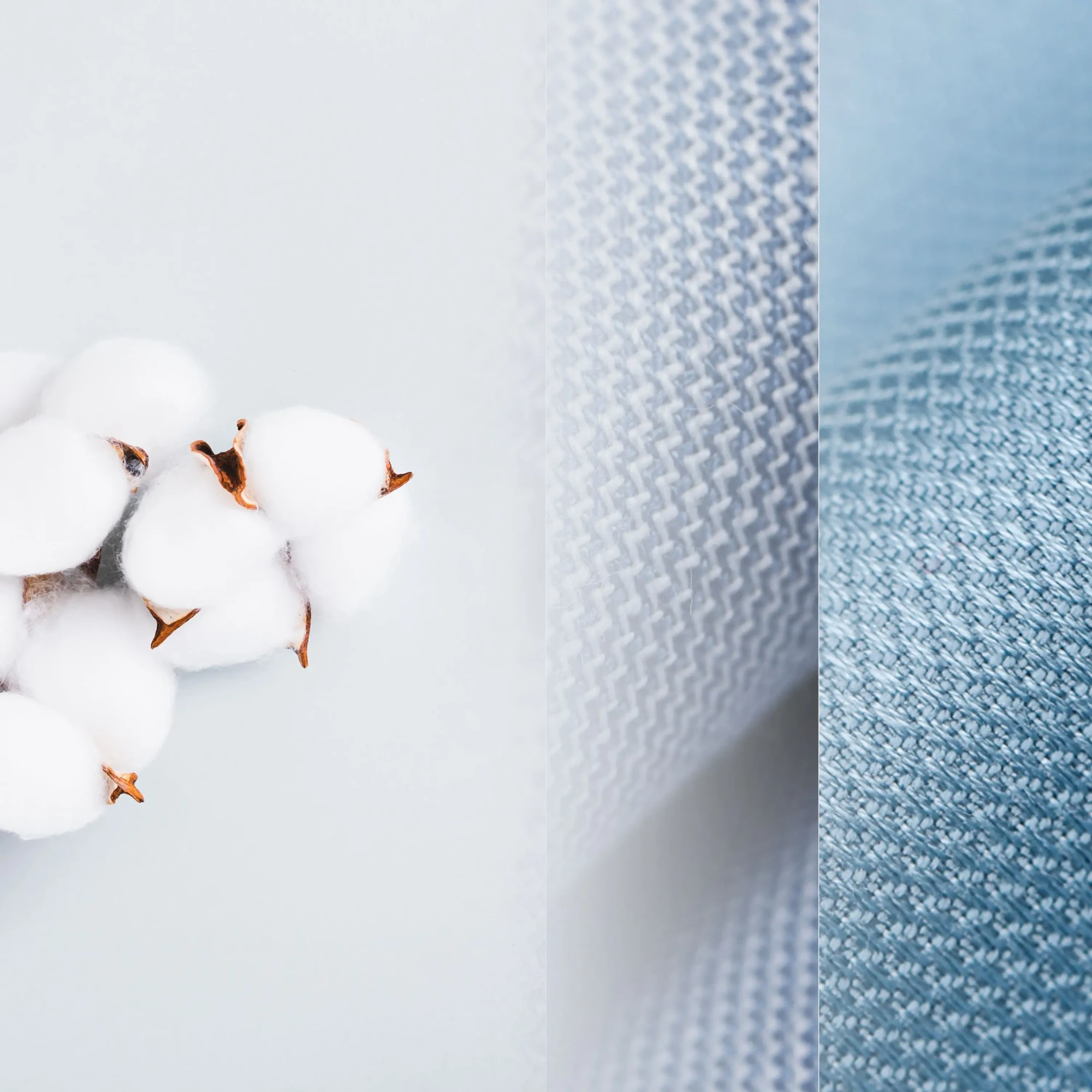
So does Egyptian cotton outshine other cottons? To understand it we need to explore the secrets of superior cotton fibers. Cotton is graded by staple length — how long an individual fiber runs before it’s spun into thread. Ordinary cotton, the kind behind most T-shirts, measures about 18 to 24 millimetres. Egyptian cotton, grown from the species Gossypium barbadense along Egypt’s Nile Delta, runs 32 to 40 — nearly double. It’s this extra length, more than anything else, that the whole reputation rests on.
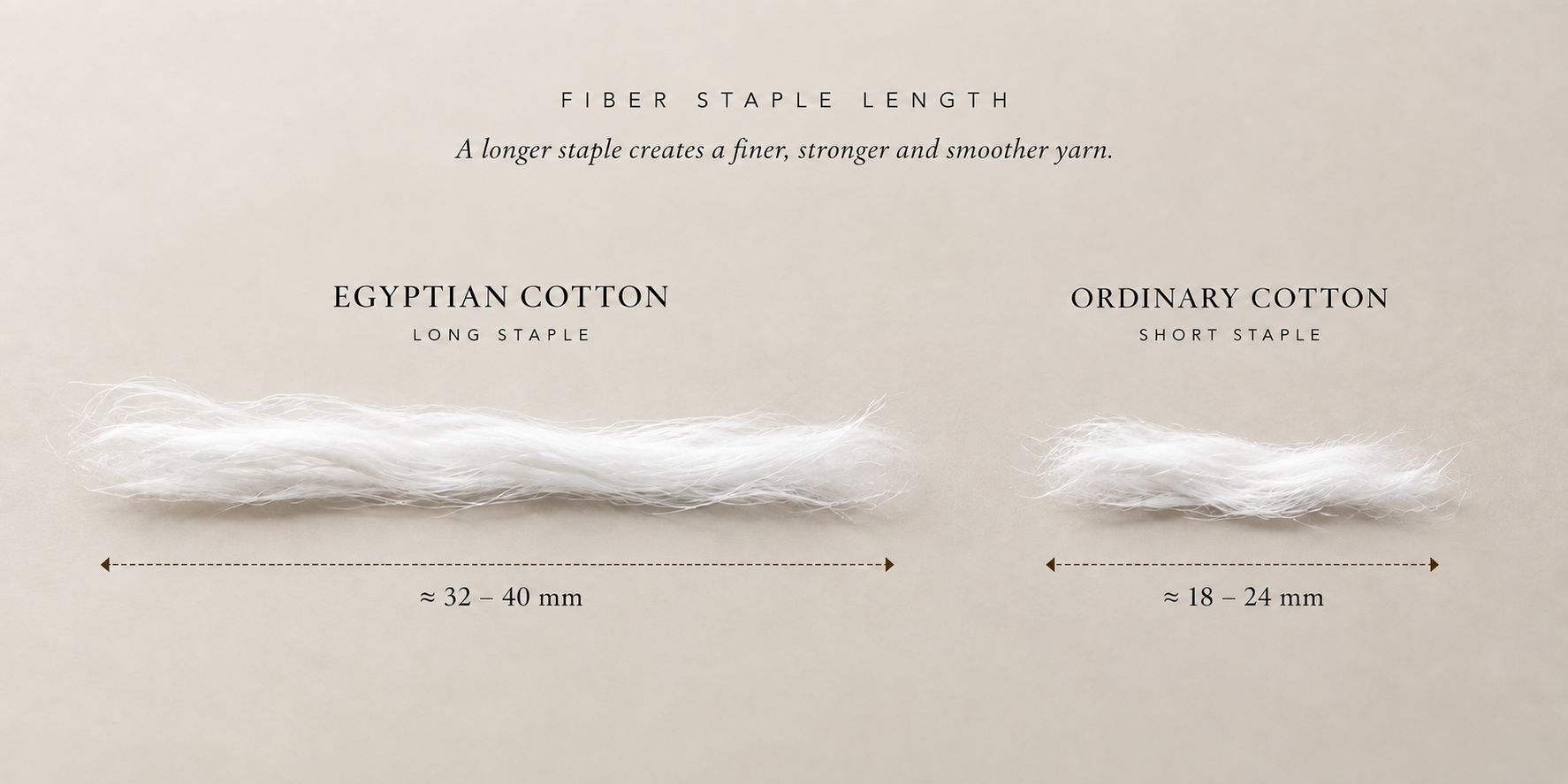
The advantage is in the length. Egyptian cotton’s longer fibres can be spun into finer yarns without sacrificing strength. A longer fiber needs fewer joins to build a length of thread, which means fewer weak points and less bulk. The result is a thread that’s simultaneously finer and stronger, with fewer loose ends left to pill, fray, or catch. Genuine Egyptian cotton, with the right weave and the right finish, doesn’t wear out. It breaks in — softening with every wash instead of thinning, the reverse of what most fabric does.
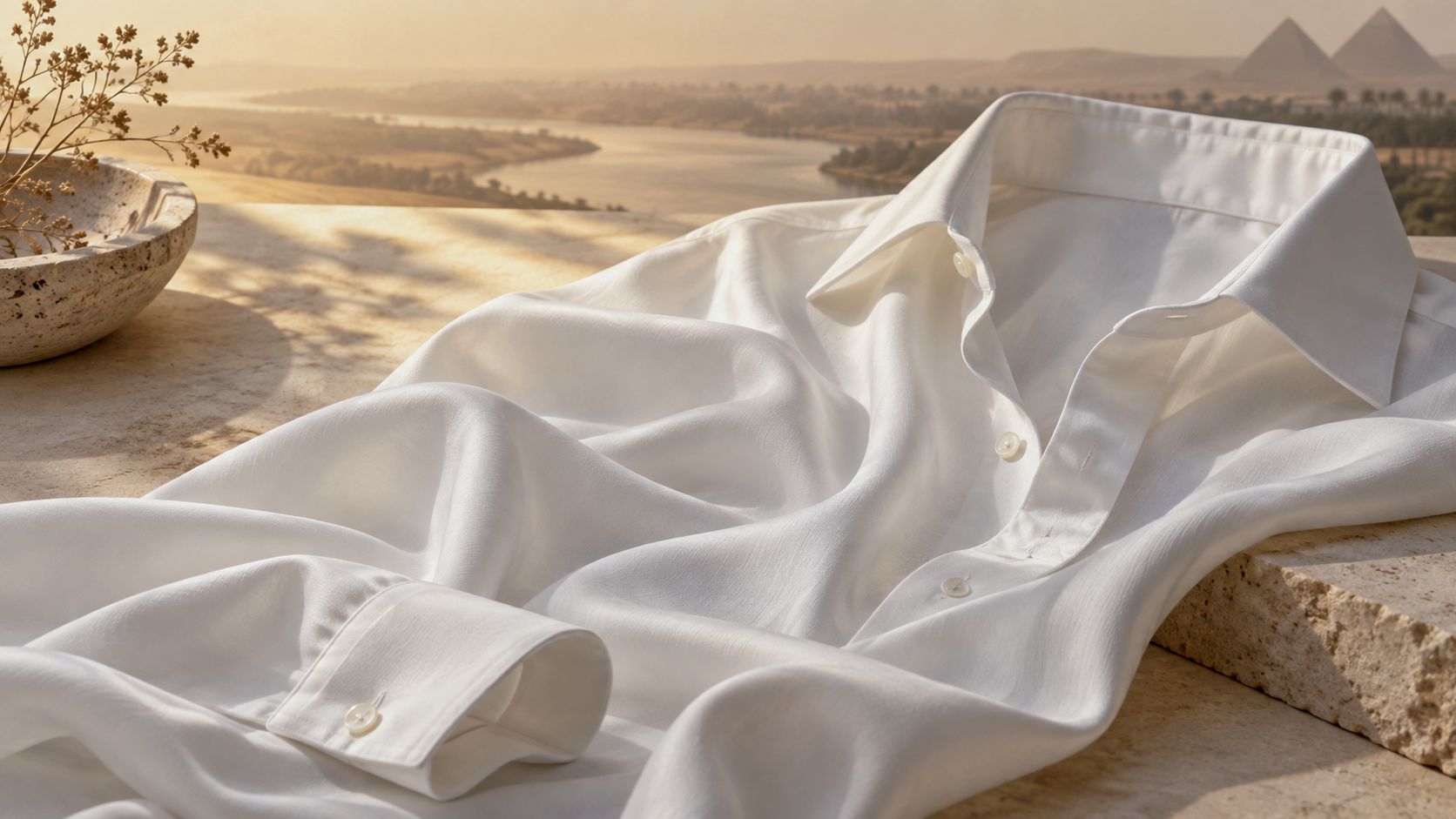
That same fiber structure gives it a natural sheen most cotton can’t match — a soft, almost silk-like luster rather than a flat, matte finish. It takes dye more evenly, holds color longer, and absorbs moisture well, which is why it feels cool against skin even in a warm climate. Looks better, feels better, lasts longer — three claims that usually trade off against each other, all delivered here by the same length of thread.
A longer fiber makes a finer yarn. A finer yarn makes a smoother weave. Nothing else about Egyptian cotton matters more than that.
Where It Shows Up in Fashion
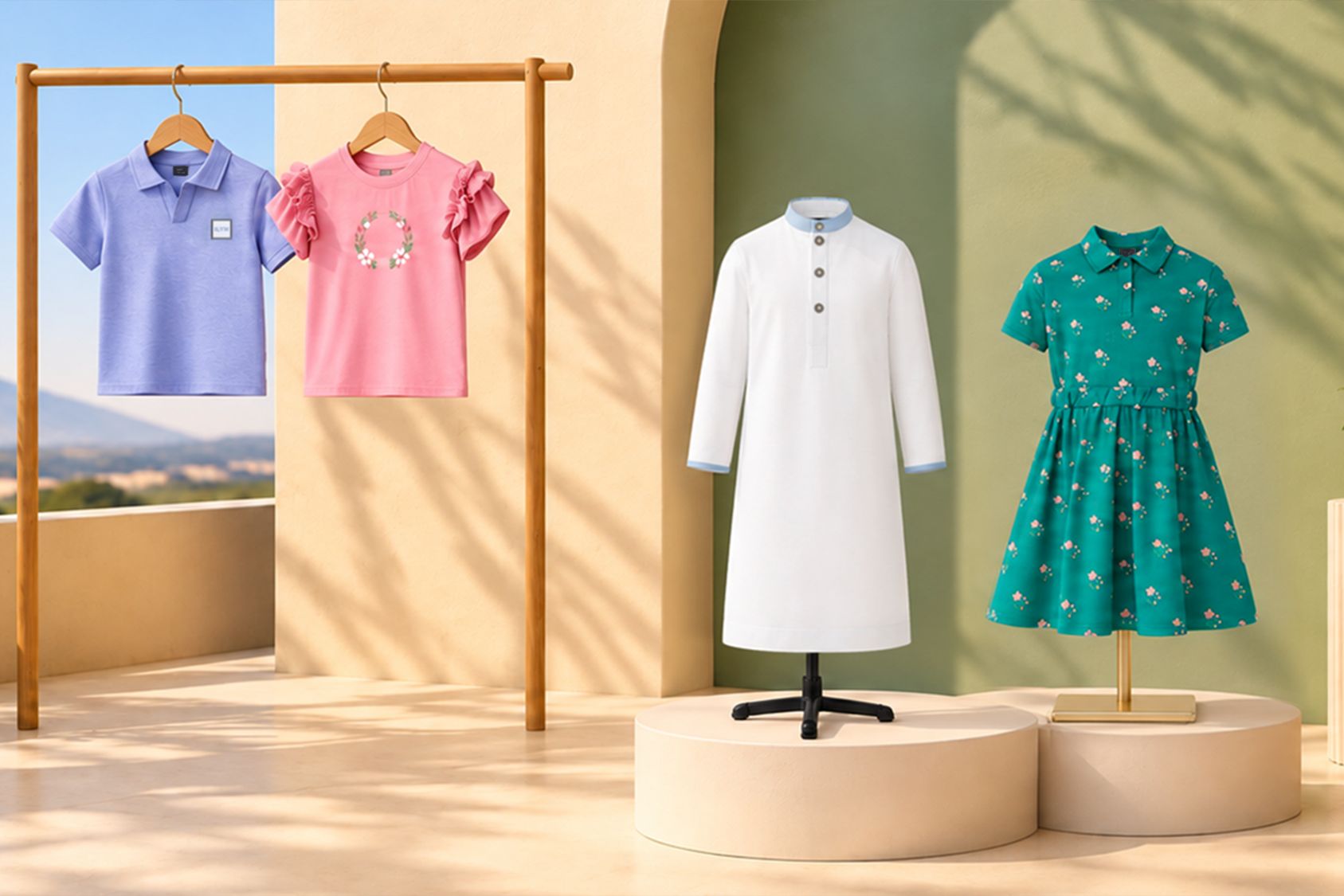
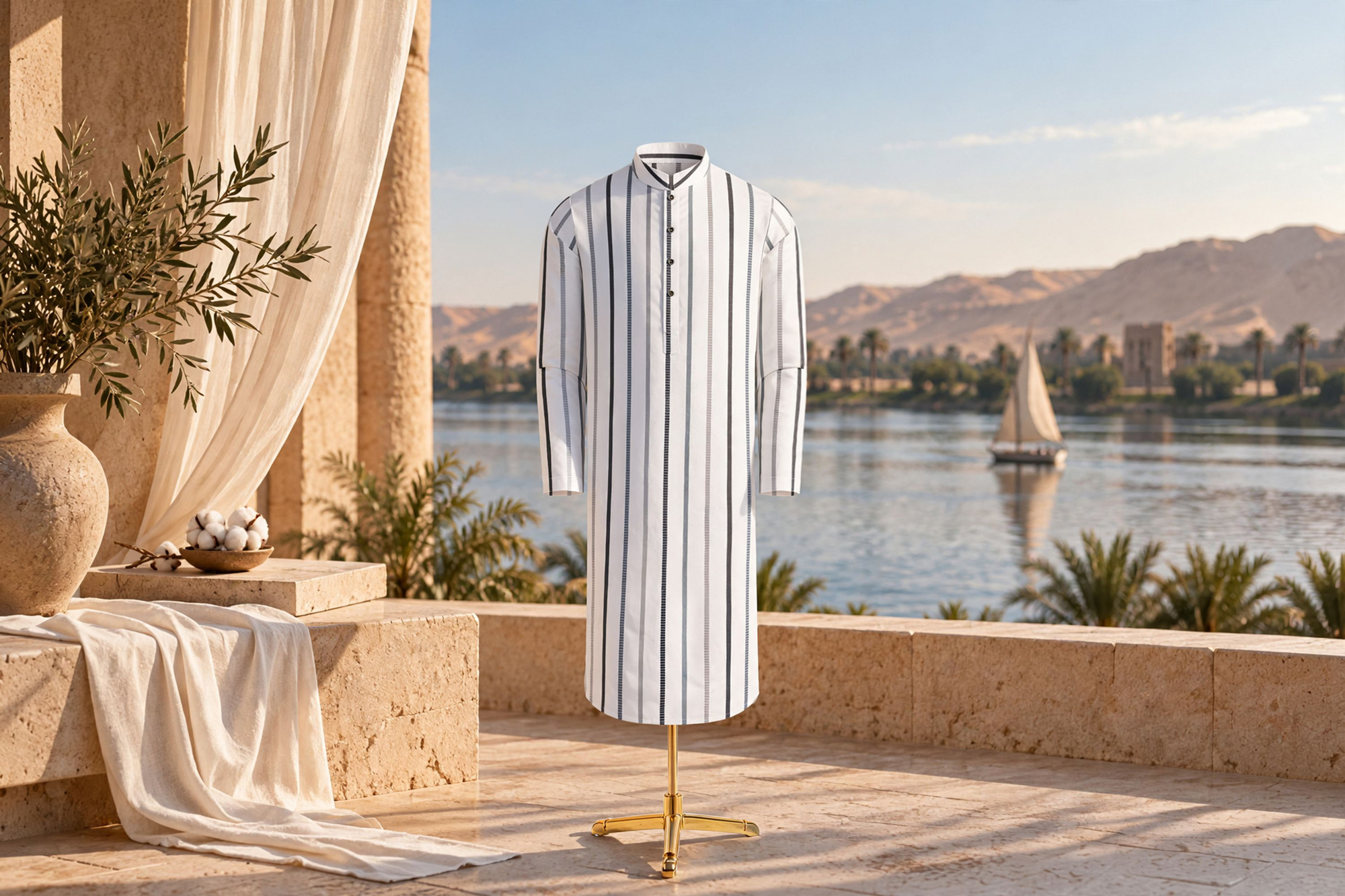
The fiber’s reputation is built almost entirely on menswear shirting, where the finest mills grade output from 2-ply 100s up to 2-ply 200s — a reference to how many times individual yarns are twisted together for strength before weaving. Beyond the dress shirt, it turns up in luxury polos and T-shirts, where a longer fiber means a cleaner surface less prone to pilling; in premium bedding and toweling, where finish and moisture absorbency both matter; and in tailoring linings, where a smooth hand counts as much as the fabric anyone actually sees. It rarely appears in denim, stretch knitwear, or anything meant to look deliberately rugged.