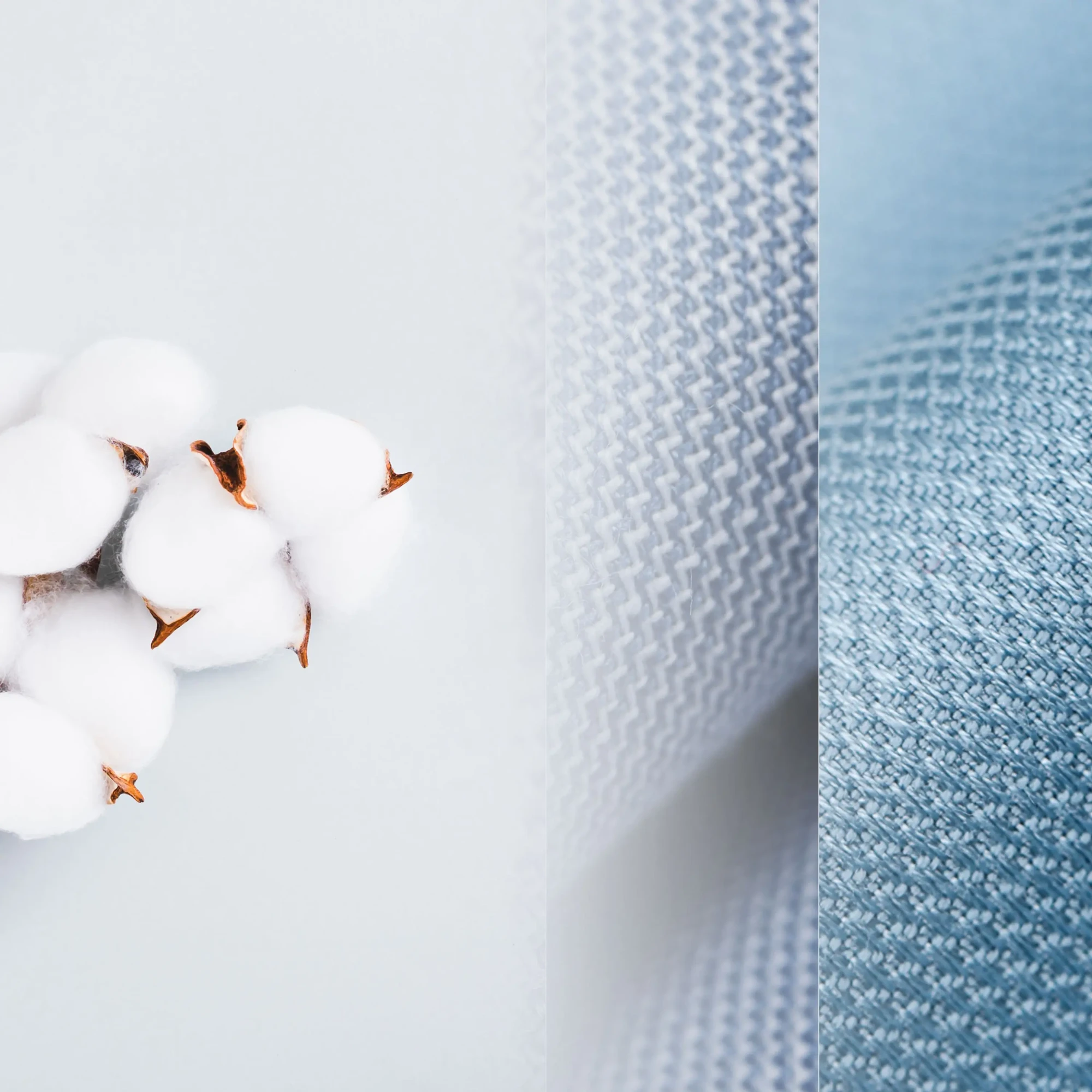

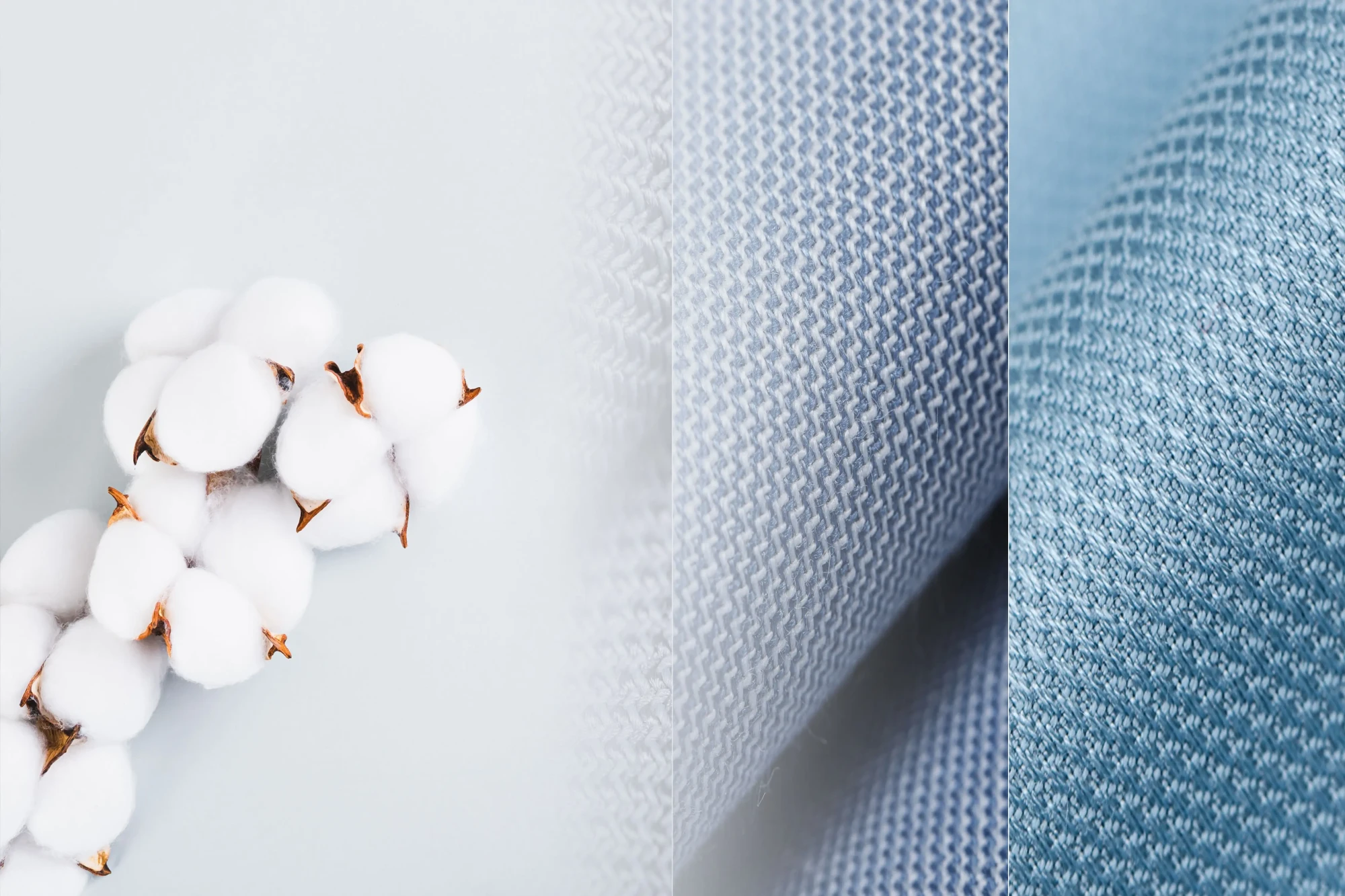


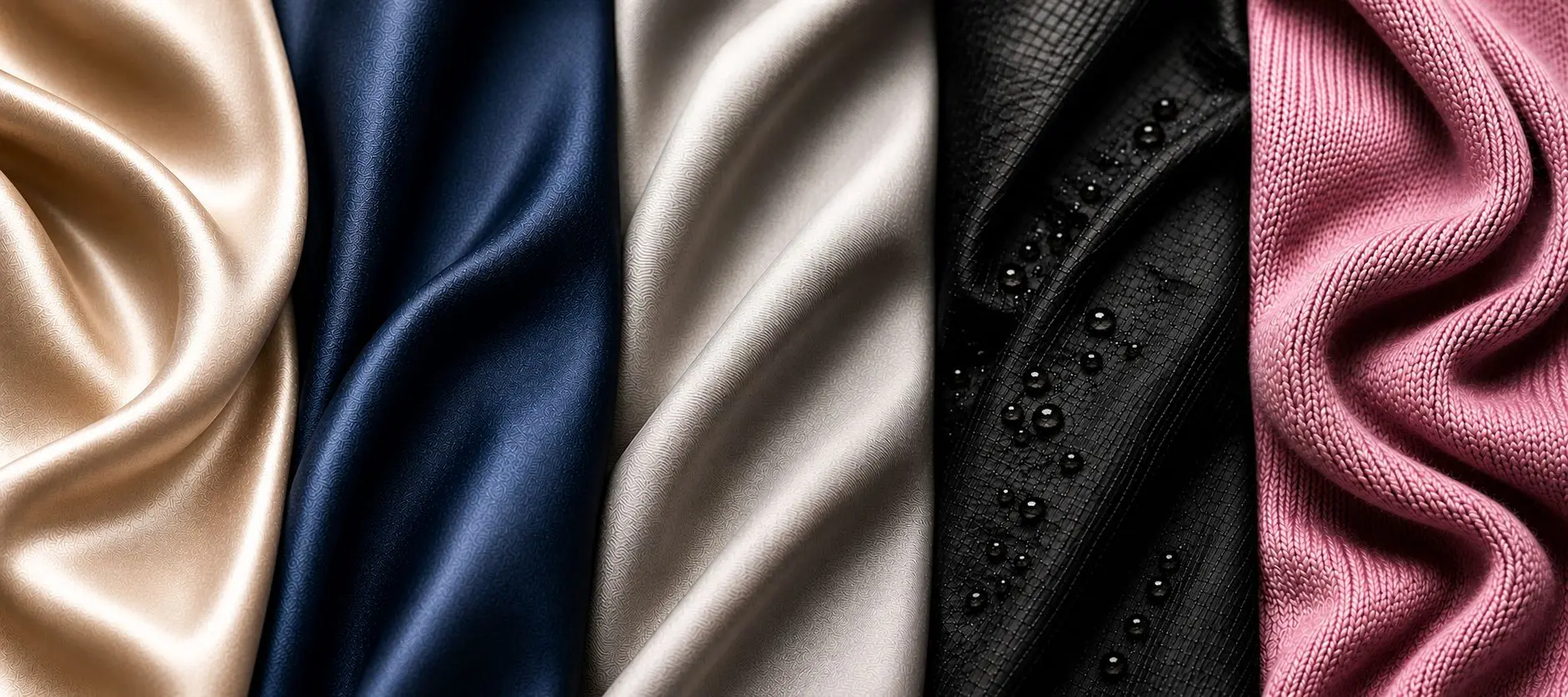
The textile industry tells two parallel stories. One belongs to natural fibers such as cotton, wool, silk, linen; materials drawn from the earth and animals. The other belongs to chemistry—fabrics created in laboratories, engineered from molecules.
Synthetic fabrics don’t replace natural ones. They offer solutions to problems that traditional materials can’t always solve. Understanding them means looking past assumptions and into what they actually are, how they came to be, and where they fit in your wardrobe.
What are Synthetic Fabrics?

Synthetic fabrics are textiles made from chemically produced fibers, created through processes involving polymers—large molecules of repeating chemical units. Unlike natural fibers that come from plants or animals, these are built from petroleum-based materials, transformed through science into threads that can be woven, knitted, and worn.
There’s a category worth noting: semi-synthetic fabrics. These start with natural materials, usually plant matter like wood pulp, then undergo extensive chemical processing. Rayon is the umbrella term here, covering viscose, modal, lyocell, and cupro. They occupy the space between fully natural and fully synthetic, carrying characteristics of both.
A Brief History
The story begins in the 1800s with attempts to recreate silk. Early experiments led to Rayon, a fabric offering silk’s smoothness at a fraction of the cost. The real breakthrough came in 1935 when DuPont introduced Nylon, the first fully synthetic fiber, at the 1938 World’s Fair.
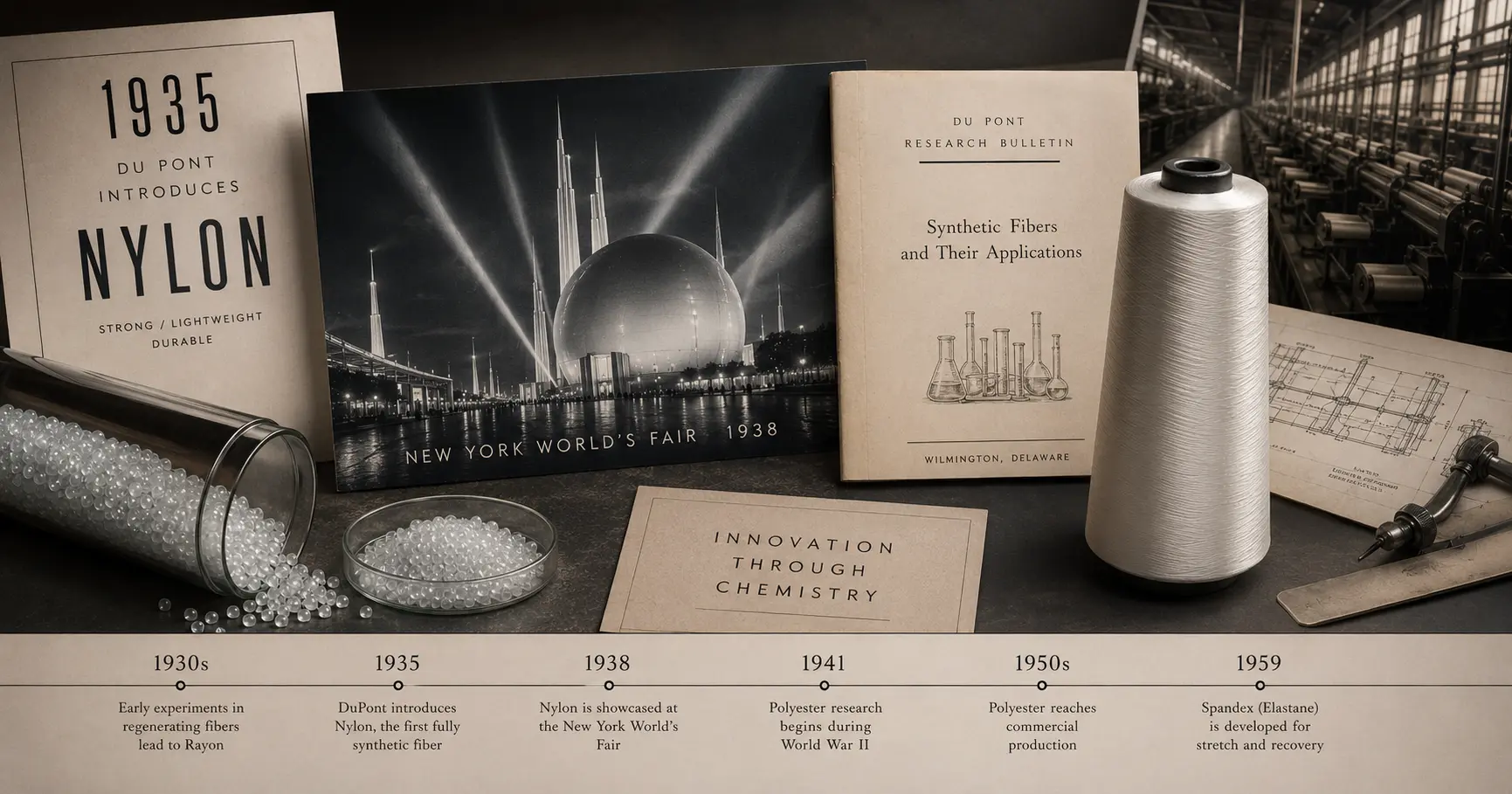
World War II accelerated development rapidly with rising military demand. Polyester followed in 1941, reaching commercial production in the 1950s. Spandex arrived in 1959, solving stretch and recovery problems that natural fibers couldn’t address. Each innovation targeted specific needs—strength, elasticity, water resistance, and durability.
The Common Synthetics: A Closer Look
Synthetic fabrics vary widely in composition and purpose, each addressing the needs that led to their creation.
Rayon (Viscose, Modal, Lyocell, Cupro)
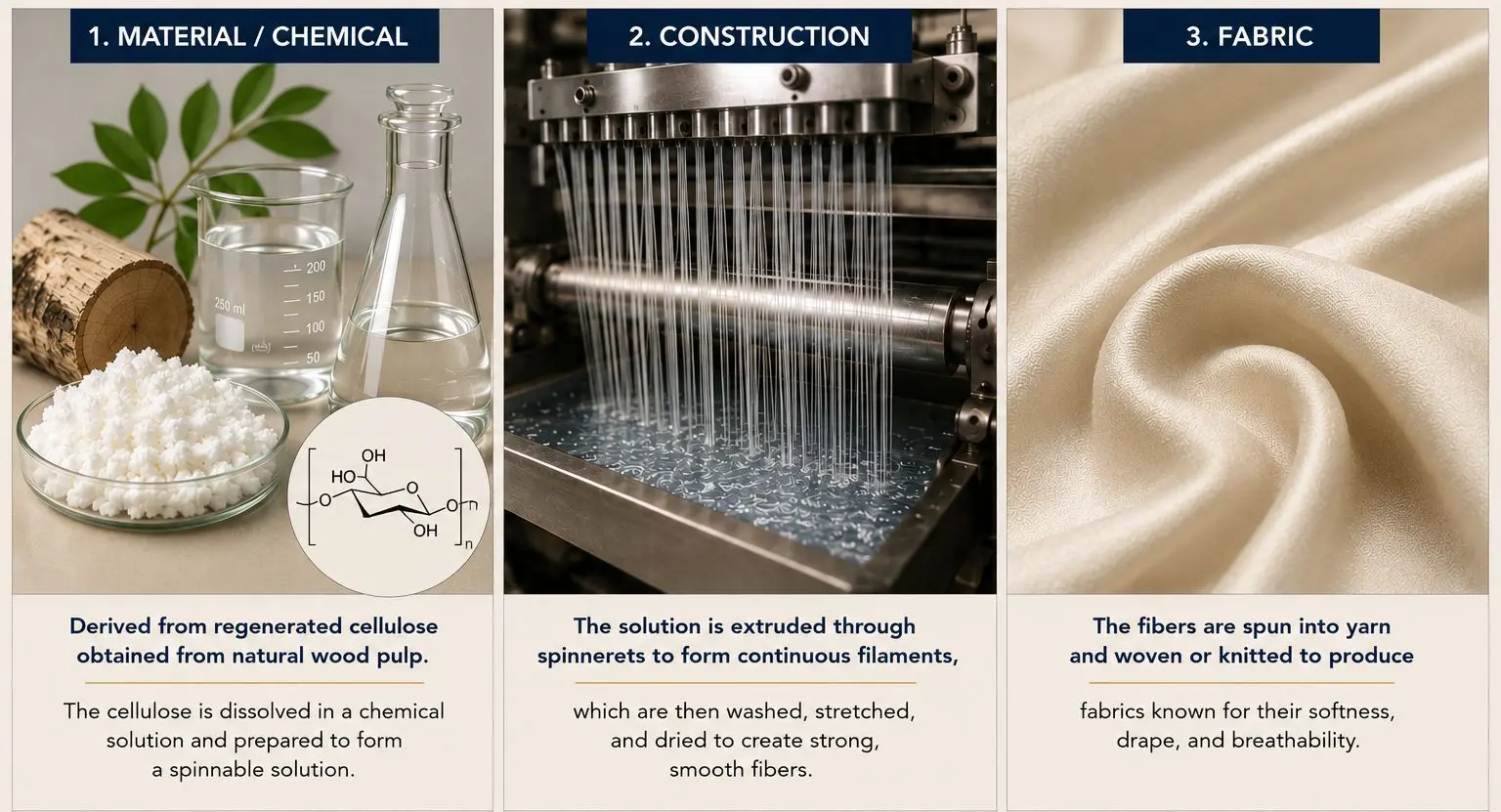
Born as silk’s more accessible alternative, rayon achieves that same smooth drape. Made from wood pulp, it breathes naturally and moves beautifully, making it a favorite for linings and garments that flow.
Polyester
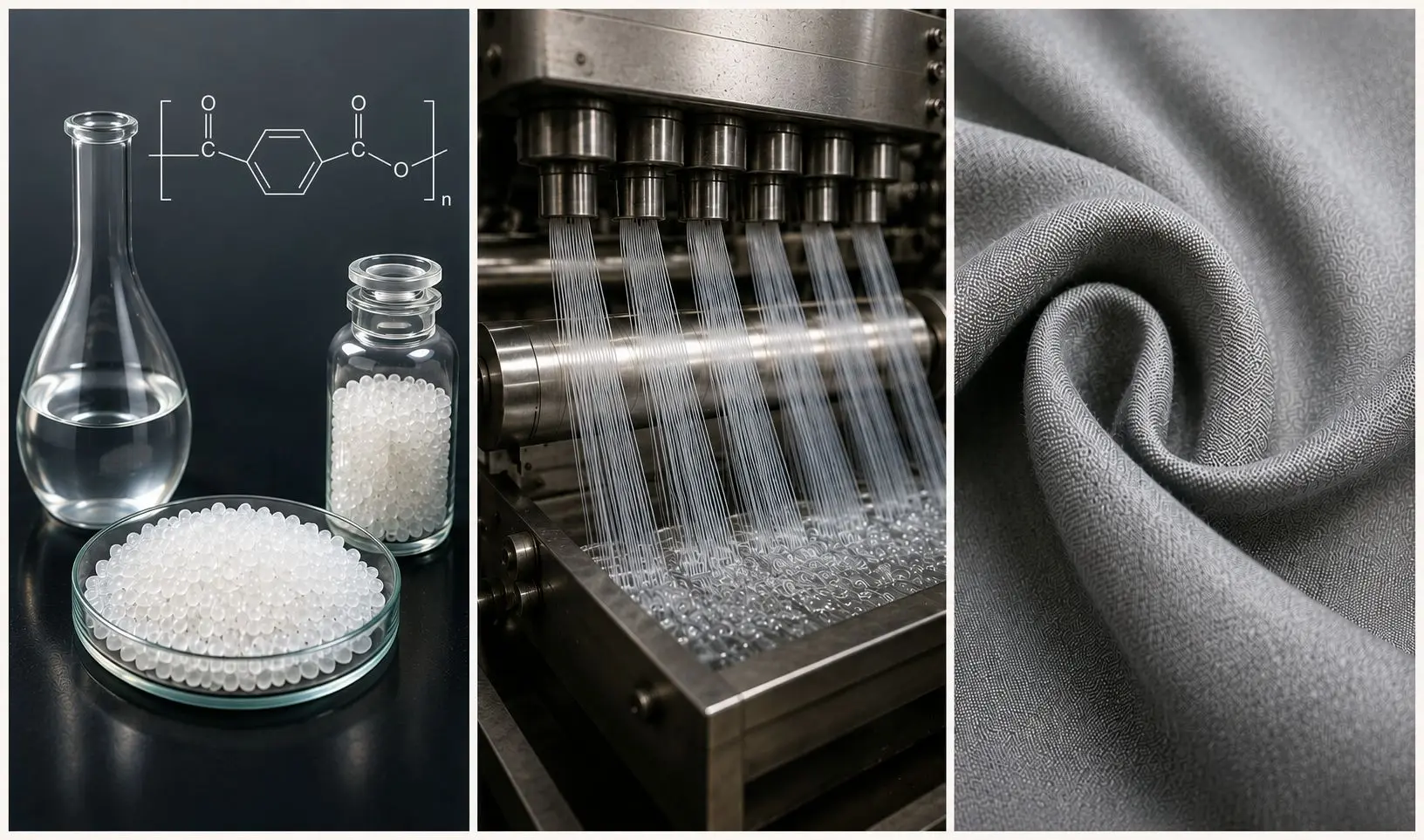
Polyester is the workhorse of synthetic fabrics, which is engineered to resist moisture and wrinkles in ways natural materials simply can’t match. It holds its shape through countless wears, which is why you’ll find it everywhere from performance wear to outerwear.
Elastane (Spandex, Lycra)
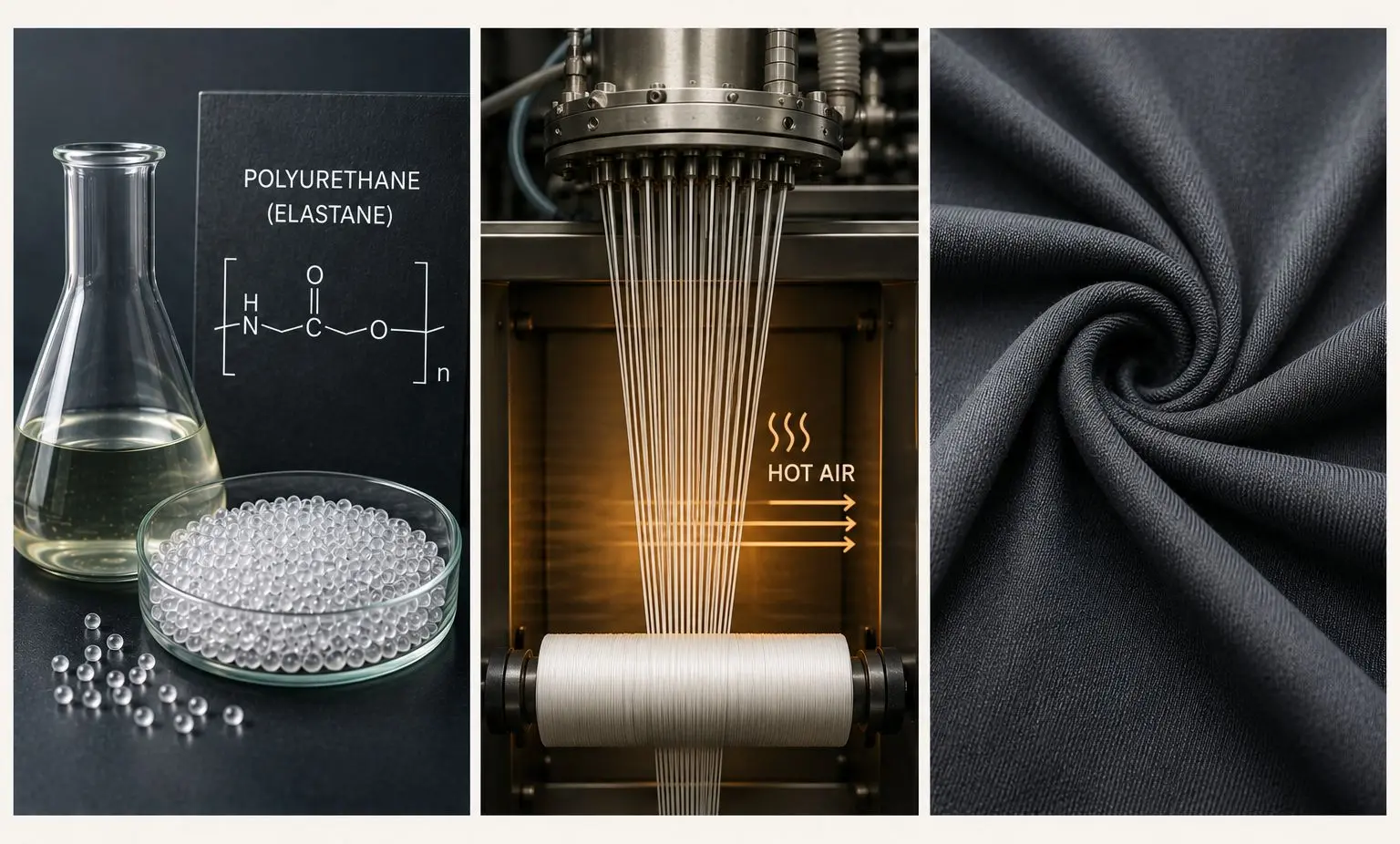
Elastane exists purely for stretch and recovery, blending invisibly into other materials to give them flexibility and form retention.
Nylon (Polyamide)
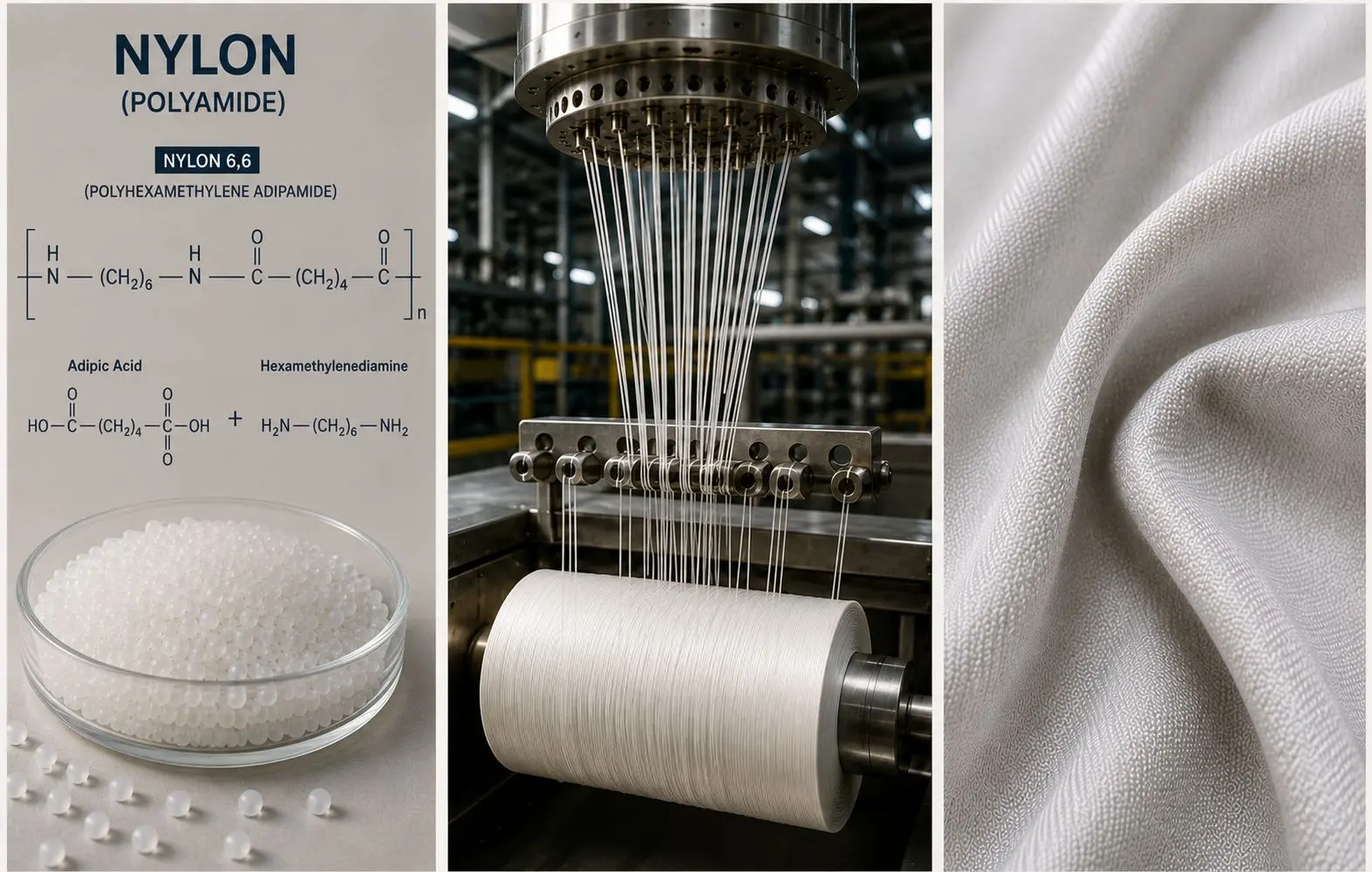
Strong enough for industrial use, light enough for hosiery—nylon proves its versatility through a sheer range of applications. Low-absorbent by nature and abrasion-resistant by design, it shows up wherever durability and weather protection matter.
Acrylic
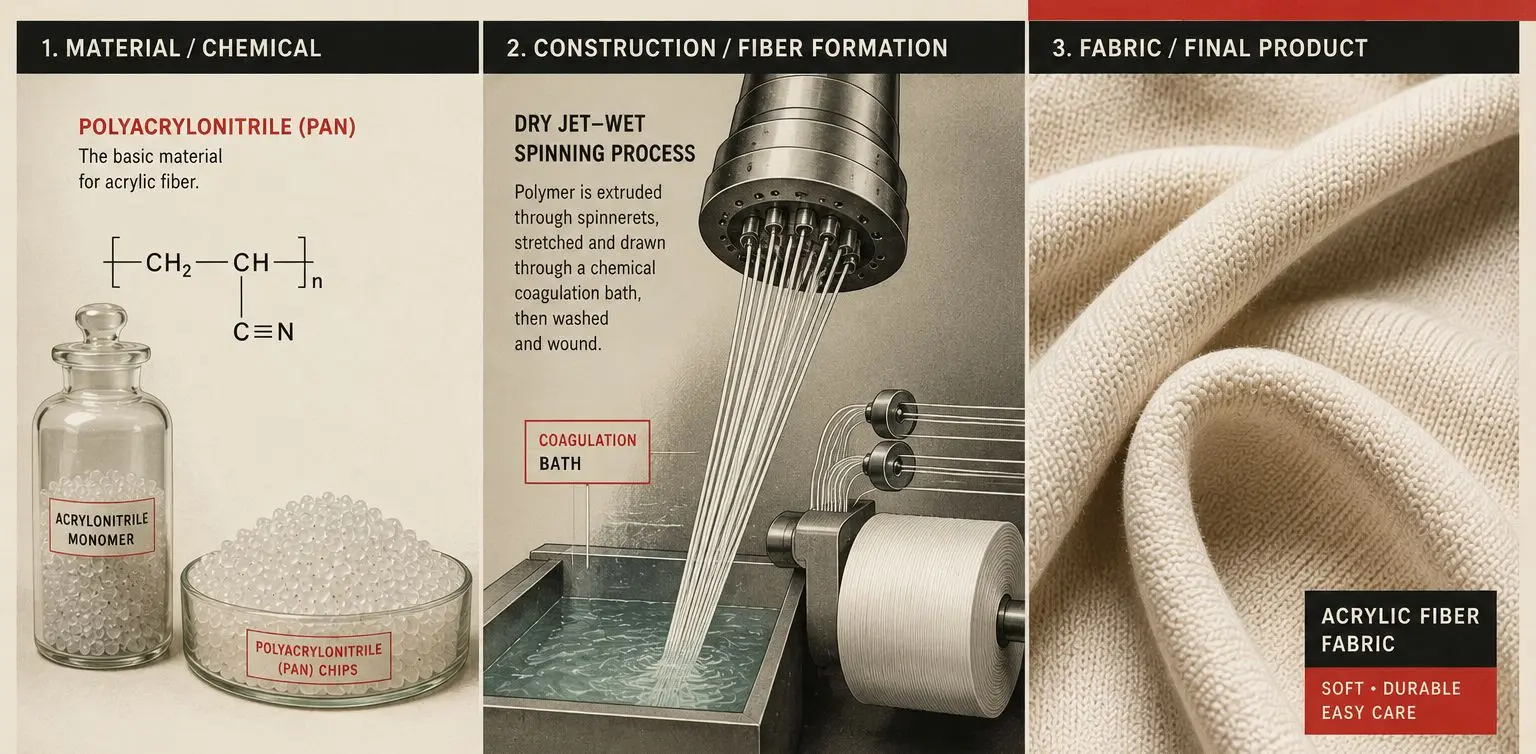
Designed to echo wool’s softness and warmth without its price tag, acrylic offers accessibility in cold-weather clothing. Lightweight, machine-washable, colorfast—it brings practical benefits to sweaters and blankets.
| Fiber Type | Origin | Key Properties | Best Uses | Limitations |
| Rayon | Plant-based (chemically processed) | Smooth, breathable, drapes well | Linings, flowing garments | High maintenance, delicate |
| Polyester | Petroleum-based polymer | Hydrophobic, wrinkle-resistant, strong | Outerwear, performance wear | Feels less breathable |
| Elastane/Spandex | Synthesized polymer | Highly elastic, shape retention | Activewear, fitted garments | Breaks down over time |
| Nylon/Polyamide | Petroleum-based polymer | Strong, water-resistant, abrasion-resistant | Outerwear, hosiery, industrial use | Heat-sensitive |
| Acrylic | Synthesized polymer | Soft, lightweight, warm | Sweaters, cold-weather items | Pills with wear |
When Synthetics Outperform
Synthetics entered fashion as practical innovations—durable, versatile, and accessible. Today, certain garments demand what only synthetics provide. For instance, thobes and abayas require specific drape, shape retention, and performance in warm climates. While natural fabrics often struggle with this combination, premium polyester maintains structure beautifully, moves with natural fluidity, and performs reliably regardless of conditions.

Structured garments tell a similar story. Jackets that hold their silhouette through hours of wear, often rely on synthetic content to maintain architectural precision. Additional features such as moisture management, quick-drying properties, and resistance to environmental conditions—synthetics excel where these matter most.
The Best of Both Worlds
Exceptional yarn engineering, advanced construction, and innovative finishing have transformed synthetic fabrics into refined materials that offer durability, easy care, and lasting performance. Yet, even with these remarkable advancements, they cannot fully replace the timeless appeal of natural fibers. The unmatched softness against the skin, effortless breathability, organic character, and quiet luxury of cotton, linen, wool, and silk remain beyond imitation.
Rather than competing, natural and synthetic fabrics each serve a distinct purpose, and true craftsmanship lies in understanding their strengths and selecting the right material to create clothing that balances comfort, performance, and enduring elegance.